
Promotional Products for Charity Events and Fundraisers
Branded merchandise can help charities and not-for-profit organisations raise awareness, reward volunteers, and give...
Branded merchandise can help charities and not-for-profit organisations raise awareness, reward volunteers, and give donors something tangible to take away.


Branded merchandise can help charities and not-for-profit organisations raise awareness, reward volunteers, and give donors something tangible to take away. This guide covers what to order, how to keep costs manageable, and what to look for when buying on behalf of a charity or fundraising team.
Why branded merchandise matters at charity events
When someone wears a branded t-shirt or carries a tote bag from your event, your cause travels with them.
That kind of visibility is hard to buy through advertising alone. Merchandise also gives volunteers a sense of belonging and makes your team easy to identify on the day.
There's a practical side too. Branded items can be sold as part of the fundraising itself, used as incentives for donors who hit a giving threshold, or handed out to raise awareness in the weeks before the event. A well-chosen product does more than one job.
Which products work well for charity events?
There's no single product that suits every fundraiser, but some categories consistently perform well for charities.
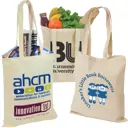
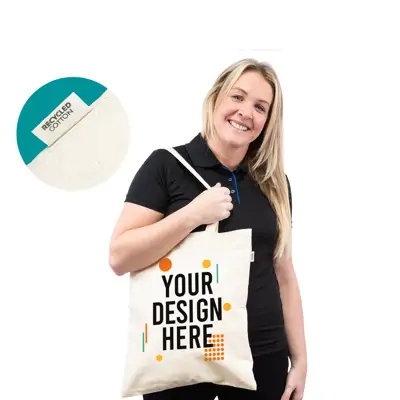
- Tote bags are popular because they're reusable, visible and practical. They work as giveaways, goodie bag inserts, or items to sell on the day.
- Lanyards are useful at any event where volunteers or staff need to be identifiable. They're low cost and quick to produce.
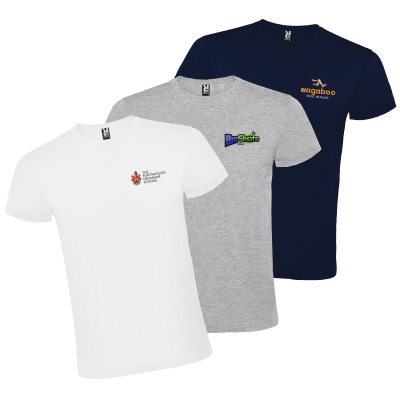
- T-shirts and vests give your team a consistent look and double as walking advertising. They're also items people genuinely keep and wear again.
- Wristbands are a staple of fundraising events. They're inexpensive, easy to distribute, and clearly associated with charity campaigns.
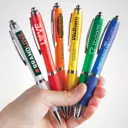
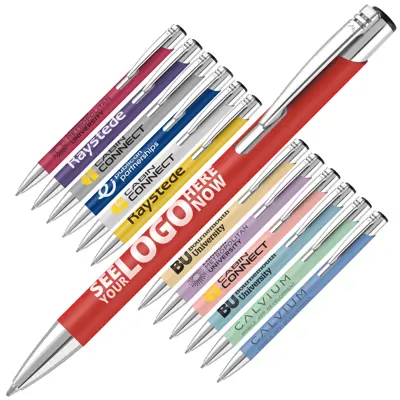
- Pens and notebooks work well as thank you gifts for donors or as practical items at registration desks.
For events with a strong community focus, our exhibition and giveaways range has a broad range of items suited to public facing occasions, and our charity merchandise collection brings the most ordered items together in one place.

What can you sell rather than give away?
Merchandise you sell is a different buying decision from merchandise you hand out, and it's worth treating it as one.
The design has to carry it. Nobody buys a logo. People buy a design they would wear or carry, with the cause attached. A t-shirt with a strong graphic and a small logo sells; a t-shirt that's mostly logo doesn't.
Work out your margin before you order. Divide what you paid per unit into what you plan to charge, and be realistic about how many you'll actually sell on the day. Overordering turns a fundraiser into a storage problem.
Pick things people buy on impulse. At an event, that usually means low price, easy to carry and easy to hand over: wristbands, pin badges, tote bags, water bottles. Anything that needs a size conversation slows a queue down.
If you're selling clothing, keep the size range tight. Two or three sizes in the most common fits will sell better than six sizes where half are left over.
Check the tax position with your finance team. How sales at a fundraising event are treated, and what that means for VAT, depends on how the event is set up, so it's worth a conversation before you price anything.
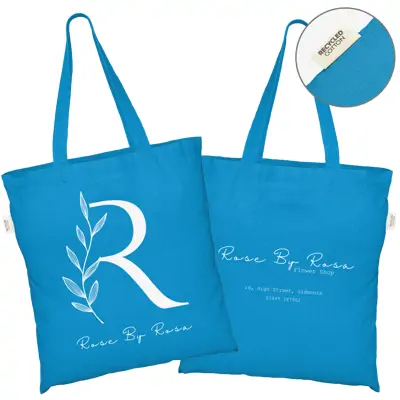
Tote bags and t-shirts are the two that most reliably sell, because people were going to need one anyway and the cause makes the choice easy.
How do you make a small budget go further?
Most charities are working with tighter budgets than commercial buyers, and that's fine to say out loud. The goal is to spend what you've in a way that gets the most visibility per pound.
- Order the right quantity. Ordering more units usually reduces the cost per item, but only order what you'll actually use. Leftover stock is wasted budget.
- Choose items with a long shelf life. A tote bag or a pen gets used long after the event. A product that's thrown away the same day gives you nothing. *** Prioritise visibility.** Items people wear or carry in public keep working after the event ends.
- Check for lower minimum options. Minimum order quantities are set per product rather than by the type of organisation ordering, and they vary a lot between items that look similar. If the minimum on one product is more than you need, a comparable product may have a lower one.
Every product page shows the price at the quantity you enter, so you can test a shortlist against your budget in a few minutes.
What should you ask about ethical sourcing?
For a charity, the products you put your name on reflect your values, and a supporter is more likely than a corporate buyer to check.
The useful question isn't whether a product is eco friendly, because that word isn't a standard and means nothing on its own. It's which certification is named on the listing.
GRS covers recycled content and tracks it through the supply chain, and it adds social and chemical requirements on top. GOTS covers organic fibre, from farming through to processing. Fairtrade covers how the growers were paid. Each answers a different question, and a product carrying one doesn't automatically carry the others.
Practically, that means looking for the standard on the product page rather than the word. Our GRS recycled cotton tote bags are a straightforward example, and our eco range shows the material on each product.
Volunteers and donors: what to think about
The people receiving your merchandise are different from a typical corporate audience. Volunteers give their time because they believe in the cause. Donors give money for the same reason. The products you choose should feel considered rather than wasteful.
That means avoiding items likely to be discarded immediately, and thinking about whether the product is genuinely useful to the person receiving it. A cheap item that gets thrown away reflects poorly on the organisation. A practical item that gets used for months keeps your cause visible long after the event.
If you're buying for a mixed audience of volunteers, donors and members of the public, it's worth asking whether one product suits all three or whether you need two or three items at different price points.
What should you get right when you order?
Get your artwork ready early. You'll need a good quality version of your logo, ideally a vector file such as an AI, EPS or PDF. If you only have a low resolution image, send it anyway and our in-house designers will tell you what's workable.
Check the delivery date before you order, not after. Every product page shows a guaranteed delivery date for the option you've chosen, and that date is locked once your order is placed. Work back from your event and pick an option that lands with a few days in hand.
Use the proof stage properly. Request a free Visual Proof and our designers will show you your logo on the product, usually in around 20 minutes. Check the spelling, the colours and the placement carefully. You can request as many changes as you need before you approve it, and the price on your proof is held for 14 days, which is useful if a trustee or committee has to sign it off.
Order a small buffer. If you need 200 items, ordering slightly more protects you against last minute additions, and a second order means paying a second setup charge.
If you want a second opinion, our Support Centre is the quickest route. Tell us the event, the quantity and the date, and we'll come back with options.