
What Are Promotional Products?
Promotional products are branded physical items used to build awareness, reward loyalty and support events. Find out...
Promotional products are branded physical items used to build awareness, reward loyalty and support events. Find out how they work and how to order them.

Related topics
View allPromotional products are physical items printed or embroidered with a company's logo, name or message, and given to customers, prospects, employees or event attendees. They're used to build brand awareness, reward loyalty, support events and stay in front of people in a way digital advertising can't.
The category is broad. Almost any physical item can be branded, which is why the useful questions are what people actually order, who buys them and how the process works.
What counts as a promotional product?
Anything that can carry your branding and be used. In practice, most orders fall into a handful of categories.
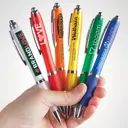
- Pens and writing instruments. Inexpensive, practical, used daily, and still one of the most ordered categories in the industry.
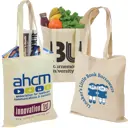
- Bags. Tote bags, drawstring bags and conference bags give you a large print area and get carried in public.
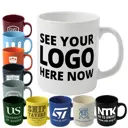
- Drinkware. Mugs, travel cups and water bottles are kept and reused, which extends the life of your branding well beyond the event.
- Clothing and caps. T-shirts, polo shirts, hoodies and caps work as both staff uniform and giveaway.
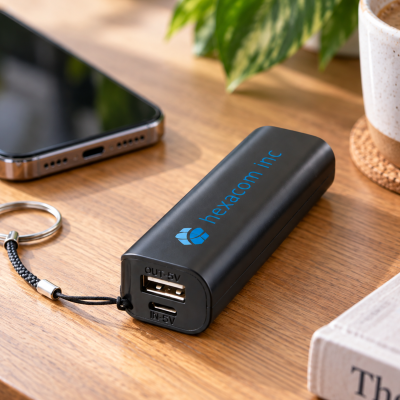
- Technology. Power banks, phone stands, charging cables and earbuds land well with professional audiences.
- Eco friendly items. Bamboo products, recycled material bags and responsibly sourced stationery.
- Paper and print. Notebooks, diaries and calendars carry your branding through daily use across a full year.
What are promotional products used for?
The common thread is that the item carries your branding out into the world and keeps it there. The most common uses:
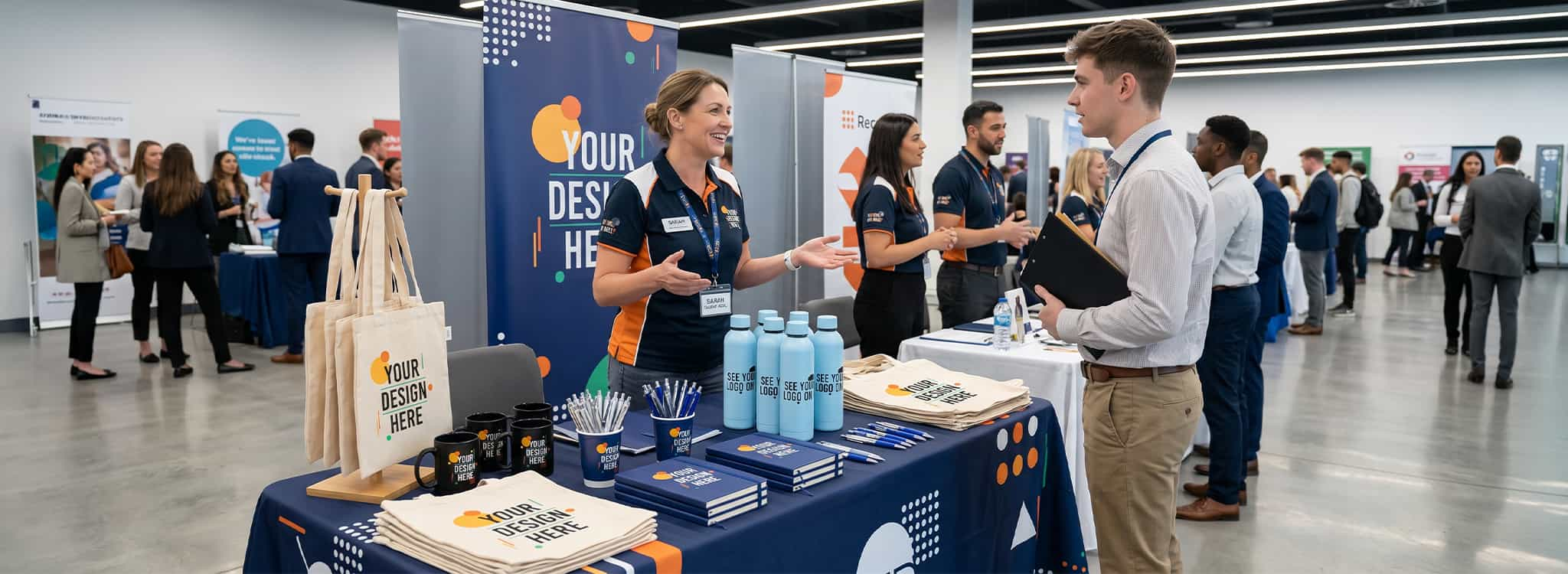
- Events and exhibitions. Giveaways at trade stands, conferences and public events put your brand in people's hands.
- Conferences. Delegates receive branded notebooks, pens, bags or lanyards as part of the event.
- Staff and employee engagement. Branded clothing, mugs and desk items help teams feel connected to the organisation, and they matter most for new starters and remote workers.
- Customer thank you gifts. A useful branded item sent with an order or after a meeting is a low cost way to stay front of mind.
- Charity and fundraising. Merchandise can be sold to raise funds, given to volunteers for identification, or handed out to raise awareness.
- Campaigns and seasonal activity. Many orders are tied to a product launch, a seasonal promotion or a specific campaign window.
Who buys promotional products?
Far more than large companies.
Businesses of every size order branded merchandise, and so do charities, schools, universities, sports clubs, community groups, NHS teams, local authorities and membership organisations. A national brand ordering thousands of totes for an exhibition and a village cricket club ordering fifty printed water bottles are doing the same thing at different scales.
That matters when you're comparing suppliers, because minimum order quantities and the size of an order a supplier will take on vary a lot. Minimums are set per product rather than as a blanket policy, so the number on the product page is the one that applies.
What is the difference between a promotional products distributor and a printer?
A printer owns decorating equipment and brands whatever it can put through it. A promotional products distributor sources products across a wide catalogue, manages the branding and delivers the finished item.
That's the practical difference, and it's the thing most people are actually asking about when they compare suppliers.
A local print shop or online printer owns presses, heat transfer or embroidery machines and works on the products it can decorate in-house. That's usually clothing, banners, leaflets and sometimes mugs. The range is narrower, but for one product type in a small run they can be quick and competitive.
A promotional products distributor doesn't manufacture. It works with manufacturers and factories, holds a catalogue running to thousands of products across dozens of categories, and handles the artwork, branding, quality checking and delivery. You get one order, one point of contact and one company accountable for the whole thing, even when your order covers pens, bags and mugs from three different sources.
A manufacturer or importer makes the blank products and often decorates them for distributors. Most don't sell to end buyers at all.
Some businesses do more than one of these, so the labels aren't absolute.
Hotline is a distributor. We work with factories across the UK and Europe, our design work is done by our own in-house team, and the ordering happens online rather than through a sales process.


How do you order promotional products?
Six steps, and you can do all of them online.
Step 1: Choose your product. Browse the range and select the product, colour, quantity and branding options.
Step 2: Request your free Visual Proof. Upload your logo and tell us how you'd like the product to look. If you aren't sure about the branding, our designers will work out the best option for you.
Step 3: Check your Visual Proof and quote. We'll usually send it back within around 20 minutes. You'll see how your branding will look, along with the price and a guaranteed delivery date. If you'd like changes, ask and we'll update it, as many times as you need, at no cost.
Step 4: Add it to your basket. Once you're happy, add the product straight from your Visual Proof. You can order several products and quantities together.
Step 5: Check out online. Review your order and your guaranteed delivery dates, then complete the purchase securely online.
Step 6: Track your order. We take care of production, and you can follow your order's progress through your online account until it arrives.
The price on your Visual Proof is held for 14 days, so there's time to get it approved internally without the figure moving underneath you.
What should you look for in a supplier?
Five things worth checking before you commit.
Do they show you a proof before production? You should see exactly what you're getting before anything goes to print. A supplier who skips that step is a risk you don't need to take.
Are the prices transparent? Setup fees, artwork charges and delivery should be clear before you order rather than appearing at checkout.
Can they commit to your deadline? Ask for a confirmed delivery date rather than an estimate. If they can't give you one, ask why.
How long have they been trading? Experience counts when something has to be right first time. We've been supplying branded merchandise to UK organisations for 35 years.
Do they offer certified sustainable options? If environmental credentials matter to your organisation, check whether the supplier can name the standard behind a claim rather than just calling a product eco.
Budget Promos
View All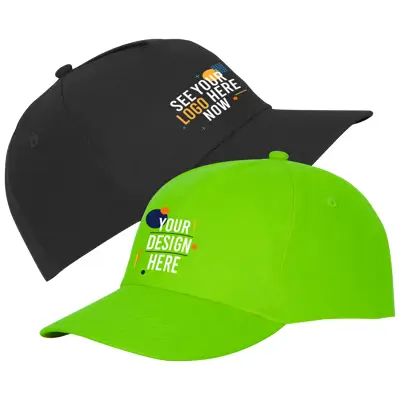


What do promotional products cost?
It depends on the item, the quantity, the branding method and the number of colours in your design, and there's no single price list that covers every combination.
Four things move the number:
- Quantity. The cost per unit falls as the quantity rises, because the setup cost of preparing artwork for print is spread across more items.
- Branding method. Screen printing, digital printing, embroidery and laser engraving all cost differently. The right one depends on the product and the design.
- Number of colours. Some methods charge per colour, so a two colour logo costs more to print than the same logo in one colour.
Delivery option. Where a product supports it, you'll see a choice of delivery options in the basket, each with its own guaranteed date. Faster costs more, and you can compare them before you decide.
Rather than quote a range, every product page shows the price for the quantity and options you enter.
Getting started
The quickest way in is to find something you like and request a free Visual Proof. It costs nothing, you'll have it back in around 20 minutes with the price and delivery date on it, and you can change it as many times as you want before deciding.
If you'd rather talk it through first, our Support Centre is the fastest route. Tell us about the event, the quantity, the budget and the deadline and we'll come back with options.