
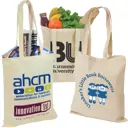
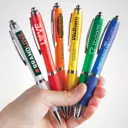
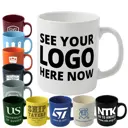
Promotional Products Under £1 That People Actually Keep
Which budget promotional products get kept and which get thrown away, and why cheap items usually carry higher minimum...
Which budget promotional products get kept and which get thrown away, and why cheap items usually carry higher minimum orders.

Most promotional products under a pound get thrown away, and the ones that do not have something in common. It is not the price. It is whether the item does a small job the recipient actually needed doing.
Here is what survives at this budget, what does not, and the reason the difference is predictable before you order.
The three questions that decide it
Before choosing anything at this level, ask three things.
Is it useful? Not interesting, not clever. Useful. Does it solve a small everyday problem?
Is it used where other people can see it? An item used in public works considerably harder than the same item used in a drawer.
Will it last? A year of daily use is a completely different return from a week.
Three yes answers and the item is worth ordering. Two and it depends on the audience. One or none and you are buying something to be thrown away, which is expensive at any unit price.
What gets kept
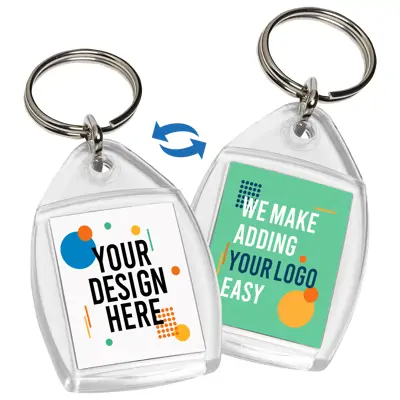
Keyrings. Unfashionable and genuinely one of the best-value items in the category. A keyring gets attached to something the recipient carries every single day, it is seen every time they open a door, and a decent metal one lasts for years. Very few things at this price point come close on longevity.
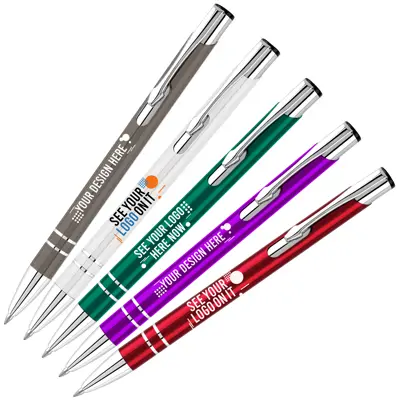
A decent pen rather than the cheapest one. Pens are the most over-supplied giveaway there is, and a bad one confirms every prejudice about promotional merchandise. A pen with a reasonable weight and a refill that does not dry out gets kept and used. Bamboo, recycled and wheat straw pens sit in this band too, and they give you something to say about the product beyond the logo, which the plastic ones do not.
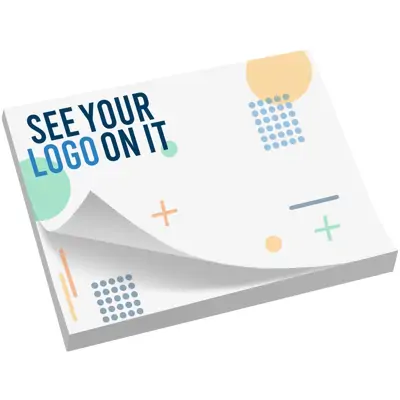
Sticky notes and small notepads. They live on a desk, they get used daily, they get seen by everybody who walks past that desk, and they are consumed slowly rather than discarded.
Bottle openers. Usually attached to a keyring, so they inherit everything above, and they solve a problem people actually have.
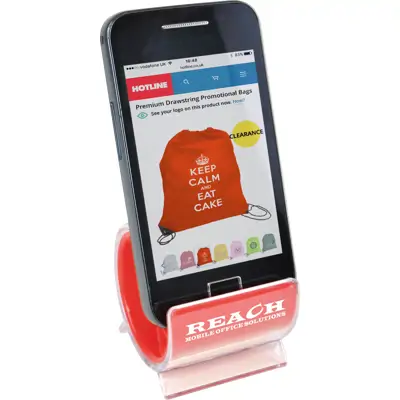
Reusable coffee cups, cable ties, cable organisers and phone stands. At the top of this band you reach small tech and practical accessories, which score well on all three questions.
Seed sticks, seed paper and plantable items. They are used once, but they are used deliberately and they tend to be remembered, which makes them a reasonable exception to the retention rule.

What gets thrown away, and what to buy instead
Being straight about this is more useful than a longer list of suggestions.
Stress balls. They are picked up, squeezed twice and left on the table. They fail all three questions: not useful, not used in public, not kept. If the appeal is that they are cheap and brandable, a keyring or a decent pen costs about the same and is still in use next year.
The cheapest possible pen. There is a floor below which a pen actively works against you, because the recipient's experience of your brand is a pen that skips. Move up slightly within the same band and the outcome changes completely.
Novelty items. Funny once, then binned. The laugh is not worth the unit cost.
Anything printed with the year. Guaranteed disposal in January.
Printed paper that could be a QR code. Leaflets at this price point are the most reliably discarded item in the category.
Branded sweets, which are a different thing entirely
Confectionery deserves its own mention because the honest answer has two halves.
Sweets generate almost no lasting impressions, because they are eaten. If you are measuring retention, they score close to zero.
They are also very good at a job nothing else on this list does, which is getting people to stop at a stand. A bowl of branded sweets pulls footfall and starts conversations, and that is worth budgeting for separately rather than judging by the same standard.
One thing worth knowing before you order them for client gifting rather than event use: food and drink are excluded from the exception that makes branded gifts deductible, so confectionery is treated differently from a branded item of the same value. Our guide to claiming branded merchandise as a business expense covers that properly.
The maths, which is the point of the whole page
An item that costs almost nothing and gets thrown away does not have a low cost per impression. It has no cost per impression at all, because nothing was ever seen.
Cost per impression is what you paid divided by the number of times the item is seen over its life. At this budget the price barely moves and the second number moves enormously, which means the entire result depends on retention rather than on shaving pennies off the unit price. Our guide to merchandise ROI covers the calculation properly.
The practical version: at this level, spend as much of the pound as you can on the item's quality and none of it on quantity you do not need.
One thing that surprises people about minimums
Cheap products usually have higher minimum orders than expensive ones, which is the opposite of what most buyers expect.
The reason is that setting up a branding run costs roughly the same whether the product costs thirty pence or thirty pounds. On an expensive item the supplier recovers that across a small number of units. On a very cheap one it takes a lot more units before the run is worth doing at all.
So "under a pound each" almost always implies a larger order rather than a smaller one. If you need a small quantity, you will usually get further by moving up a price band than by looking for the cheapest possible item. The minimum on each product page is the one that applies, and if it is higher than you need, ask us, because there is often a comparable product with a lower one.
If sustainability is part of the brief
The cheapest end of the range is where the landfill question is sharpest, and the honest answer is the same as the commercial one: an item that gets kept is the sustainable choice, whatever it is made of. Reuse beats material every time.
Beyond that, recycled, bamboo and wheat straw options exist across most of this band at a small premium. Our guide to buying eco-friendly merchandise covers how to check a claim rather than take it on trust.
To see what is available, browse our exhibition and giveaways range. Tell us your budget per head and how many you need, and we will tell you what we would order.