
How to Choose Promotional Products for an Event
Discover practical tips on selecting effective promotional products for various events, tailored to audience, budget...
Discover practical tips on selecting effective promotional products for various events, tailored to audience, budget, and event format.
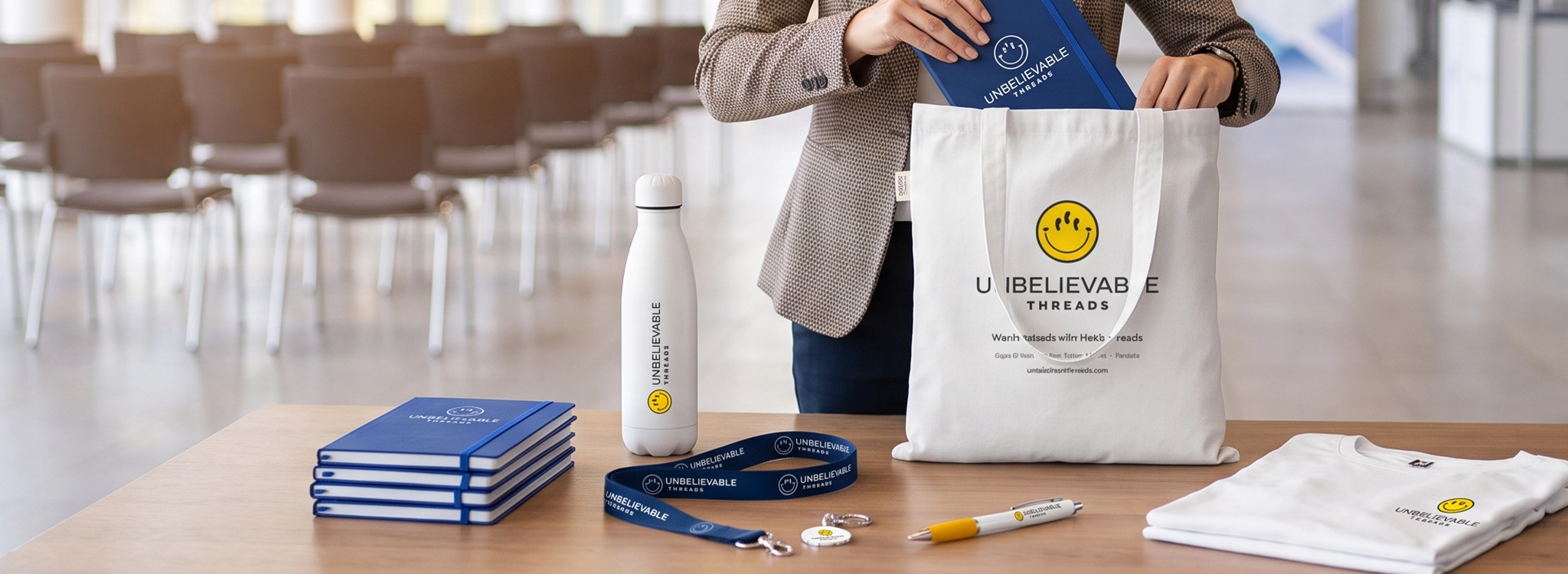

Choosing the right promotional products for an event comes down to four things: your audience, your budget per head, your lead time, and what you want people to do with the item after the day is over.
That last one is the part most people skip, and it's the difference between merchandise that keeps working for months and merchandise that goes in the bin on the way to the car park.
Who is it actually for?
Start with the audience rather than the product. It gives you a much shorter list, much faster.
Who are they?
Delegates at a professional conference have different tastes from students at a freshers fair or guests at a charity gala.
What will they've with them?
Someone arriving with a laptop bag can take a notebook. Someone in evening wear can't carry a tote bag all night.
What do they already have too many of?
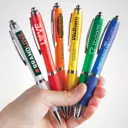
Pens and stress balls are the most over supplied items at events, which doesn't mean avoid them. It means that if you're giving out a pen, it has to be one people would choose to keep, rather than the fourth identical one in the bag.
What would they actually use?
Think about the 48 hours afterwards. What's still on the desk, in the bag or in daily rotation by the following Monday?
How do you stop giveaways being thrown away?
Give away fewer, better things, and give them to fewer people.
Most event merchandise gets binned because it was bought to fill a table rather than to be useful. The fix isn't a cleverer product, it's a different starting question: would this person have bought this if they had seen it in a shop?
Five things that make the difference:
Usefulness beats novelty every time
A novelty item gets a laugh at the stand and nothing after that. A decent pen, a bottle, a notebook or a phone charger gets used. If you have to explain what it's for, it isn't it.
Make it better than the one they already own
People don't throw away the best version of something. They throw away the fourth best. That usually means spending more per unit on fewer units, which is a trade most stands are afraid to make.
Give it to qualified people rather than everyone
Handing something to every passer by guarantees most of it's wasted. Keeping the better item behind the desk for people who actually stop and talk makes the budget go further and makes the item feel earned.
Think about the journey home
Anything bulky, fragile, awkwardly shaped or heavy gets left in a hotel room or a bin at the station. If it doesn't fit in a bag, it doesn't go home.
Watch the branding
A subtle logo on something good gets used in public for years. A product covered in branding gets used at home, or not at all. The restraint is what buys you the visibility.
One honest exception: consumables. Branded sweets, chocolate and coffee get consumed rather than discarded, which sidesteps the problem entirely. They won't carry your logo into next year, but nothing gets binned either.
What works as a trade show giveaway?
Bags, drinkware and anything that solves a problem people have while they're at the show.
Exhibitions are their own category, because attendees are walking a hall for hours carrying everything they collect. That shapes what works.
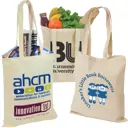
A bag is the highest value giveaway at a trade show, because it's what everything else goes into. Whoever's bag someone picks up gets carried past every other stand for the rest of the day.
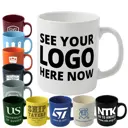
Drinkware works because people get thirsty walking a hall, and a reusable bottle gets refilled at the water station rather than replaced.
Tech accessories land well where attendees are on their devices all day and running out of charge by mid afternoon.
Keep it flat and light for anything you're giving out in volume. Every gram and every centimetre makes it less likely to go home.
Avoid anything that eats your stand space. If you have to store it, it's competing with the thing you came to show people.
Which products suit which event?
Different formats call for different choices.
| Event type | Products that work well | Products to avoid |
|---|---|---|
| Conference or seminar | Notebooks, pens, tote bags, lanyards, power banks | Novelty items, food, anything fragile |
| Exhibition or trade show | Tote bags, tech accessories, reusable bottles | Heavy items, items that take up too much stand space |
| Corporate away day or team event | Branded apparel, drinkware, outdoor accessories | Desk items, because nobody is at a desk |
| Charity or fundraising event | Eco products, wristbands, reusable items | High-cost items that raise questions about spend |
| Product launch | Premium items, tech, branded packaging | Generic giveaways that do not reflect the brand tier |
| Freshers fair or campus event | Low-cost high-volume items, bags, stationery | Premium items, given the audience and the theft risk |
How much should you budget per head?
Divide your total merchandise budget by your expected attendance. That number drives almost every other decision.
Indicative bands, checked September 2026:
- Under £1 per head: pens, badges, stickers, lanyards
- £1 to £3 per head: notebooks, tote bags, basic drinkware
- £3 to £7 per head: mid range tech accessories, quality drinkware, eco products
- £7 to £15 per head: power banks, premium notebooks, branded apparel
- £15 and above: premium products, gift sets, tech items
These are a starting point rather than a price list. Every product page shows the price for the quantity and options you enter, so test your shortlist against your figure rather than assuming.
If your budget per head is lower than the minimum order quantity allows on a product you want, check a similar item, because minimums vary considerably between products that look almost identical.
One thing worth doing with the number
Rather than spending it evenly across everyone, consider spending most of it on fewer people. A hundred people receiving something they keep is worth more than five hundred receiving something they don't.
How long do you need?
The earlier you start, the more choice you'll have. If time is tight, you still have options.
- 4 weeks or more. Plenty of choice across the full range, with time to consider different products and make changes to your Visual Proof™.
- 2 to 3 weeks. Most of the range is still available, including a wide choice of products and branding options.
- 1 to 2 weeks. Still plenty of options. Check the guaranteed delivery date shown on the product page before ordering.
- Under 1 week. Start with our express range, which is set up for speed.
Whatever the timescale, we show you the delivery date for the product and delivery option you've chosen before you pay, and that date is guaranteed once your order is placed.
Bear in mind that production is rarely the slow part. Collecting clothing sizes, sorting out artwork and getting your proof approved internally usually take longer.
What should you check on your Visual Proof™?
Request a free Visual Proof™ before you order and our in-house design team will show you your branding on the product, usually in around 20 minutes. You can request as many changes as you need.
When it comes back, check:
- Your logo's size and position
- The colours, particularly if your brand uses specific Pantone references
- Any text, URLs or taglines, for spelling and accuracy
- That the branding method suits the finish you want
Once you're happy, add the product to your basket and check out online. Your approved Visual Proof™ is what our production team works from, so it's worth the two minutes.