

Recycled and Organic Tote Bags: What the Labels Actually Mean
What GRS, RCS, GOTS, Fairtrade and OEKO-TEX mean on a tote bag, recycled versus organic cotton, and how to check a claim before you order.

Related topics
View allA recycled tote bag is made from fibre that has been used before. An organic one is made from cotton grown without synthetic pesticides or fertilisers. They're separate claims, with separate certifications, and a bag can carry one without the other.
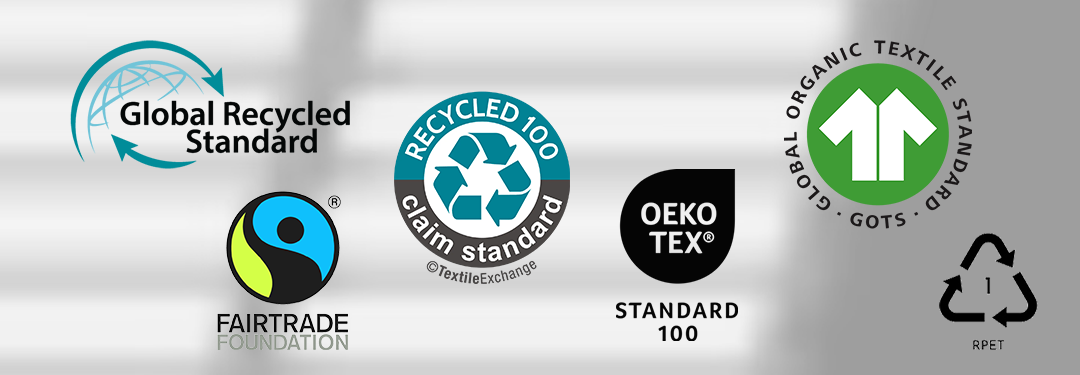
The label to look for is the standard named on the product listing: GRS for recycled content, GOTS for organic cotton, Fairtrade for how the growers were paid. If a bag is described as eco with no standard behind it, that's worth asking about before you put your logo on it.
GRS: the Global Recycled Standard
GRS is run by Textile Exchange and it certifies recycled content, tracked through the supply chain from the reclaimed material to the finished bag.
There are two thresholds worth knowing. A product needs at least 20% certified recycled content to be GRS certified at all, and at least 50% before it can carry the GRS logo. So a bag can legitimately be GRS certified without displaying the logo, and the percentage matters more than the presence of a mark.
GRS also covers more than the material. It sets social requirements around fair labour and worker safety, environmental requirements around processing, and restrictions on the chemicals used. That's the part that separates it from a content only claim.
RCS: the standard people mistake for GRS
RCS is the Recycled Claim Standard, also from Textile Exchange, and it does one job: it verifies and traces recycled content.
It starts at 5% recycled content rather than 20%, and it carries no social, environmental or chemical processing requirements. So RCS tells you the recycled content is real. GRS tells you the recycled content is real and that the conditions it was produced under were audited.
Both are legitimate. They just answer different questions, and they're frequently written about as though they're the same thing.
GOTS: the Global Organic Textile Standard
GOTS covers organic fibre from the farm all the way through spinning, weaving, dyeing, sewing and labelling. That end to end scope is the point of it, because cotton can be grown organically and then processed with chemicals that undo most of the benefit.
There are two label grades. Organic requires at least 95% certified organic fibre. Made with Organic Materials requires at least 70%. Both grades have to meet the same processing and social criteria, so the difference between them is fibre content rather than rigour.
If a bag is described as organic cotton with no GOTS grade attached, the claim covers how the cotton was grown and nothing after that.

Fairtrade cotton
Fairtrade is about the growers rather than the fibre or the fabric.
Cotton carrying the Fairtrade mark has been bought under terms that include a minimum price and an additional premium paid to the producer organisation to invest as it chooses. It says nothing about whether the cotton is organic or how the fabric was processed.
It can sit alongside an organic certification, and on some products it does. The two are answering different questions.
OEKO-TEX Standard 100, which isn't an eco label
This is the one most often misread.
OEKO-TEX Standard 100 tests a finished textile for harmful substances and confirms that what's in the fabric is within safe limits. It's a chemical safety certification, and a useful one, particularly for anything worn against skin.
It doesn't tell you the cotton was grown organically, that anything in the bag is recycled, or how much water or energy went into making it. If a supplier offers OEKO-TEX as evidence that a bag is environmentally friendly, ask what else it carries.
Words that aren't standards
Eco. Not a certification and not defined. It means whatever the person writing the listing wants it to mean.
Natural cotton. Unbleached, undyed cotton. It describes the finish, not the farming, and a natural bag is no more organic than a dyed one.
Recycled cotton. Usually accurate as a description, but a description isn't a certification. Ask which standard covers it and at what percentage.
Sustainable, green, earth friendly, conscious. All unregulated. Treat each one as an invitation to ask a follow up question rather than as an answer.
rPET and recycled polyester
rPET is polyester made from recycled plastic, most often drinks bottles.
You'll find it in two places on a tote bag. Some bags are made entirely from it, usually as a lightweight non woven or woven fabric that takes a full colour print well. And recycled cotton is very often blended with rPET, because recycling shortens cotton fibres and the polyester restores the strength.
That blend is why a bag described as recycled cotton is rarely 100% cotton, and it's the number worth checking on the listing.
More Eco-Friendly Products
View All



How to check a claim in about two minutes
All three of these are available to you as a buyer, not just to the supplier.
For GOTS, check the licence number. A genuine GOTS claim comes with a certifier name and a licence number, and you can look that number up in the GOTS public database. No licence number means the claim hasn't been verified by anyone.
For GRS or RCS, ask for the Scope Certificate. Certified suppliers hold one, it names what they're certified for, and it has an expiry date on it. A supplier who's certified will have it to hand.
For OEKO-TEX, use the label check. Each certified article carries a number and the name of the test institute, and both can be checked on the OEKO-TEX site.
If you're reporting on your own supply chain, ask for these at the quote stage rather than after delivery.
The standards at a glance
Thresholds checked September 2026. Textile Exchange is in the process of consolidating GRS and RCS into a single Materials Matter Standard, so it's worth confirming the current position on a large order.
| Standard | What it covers | Threashold | How to verify |
|---|---|---|---|
| GRS | Recycled content, plus social, environmental and chemical processing criteria | 20% minimum to certify, 50% to use the logo | Scope Certificate |
| RCS | Recycled content and traceability only | 5% minimum | Scope Certificate |
| GOTS | Organic fibre plus the full processing chain and social criteria | 95% for Organic, 70% for Made with Organic Materials | Licence number in the GOTS database |
| Fairtrade | Price and premium paid to cotton growers | Not a content threshold | Fairtrade mark and certifier |
| OEKO-TEX Standard 100 | Harmful substances in the finished fabric | Not an environmental claim | Article number and test institute |
So which is actually greener?
The honest answer is that it depends less on the label than on what happens to the bag afterwards.
A certified organic tote handed out at a show and binned that evening has done more harm than an ordinary cotton one carried for five years. Every material choice here's dwarfed by the number of times the bag gets used, which is why the useful questions are whether people will want to carry it and whether it's well enough made to last.
Certification still matters, particularly if you're reporting against a procurement policy or a net zero commitment, because it's the difference between a claim you can evidence and one you can't. Choose the standard that matches what you need to prove, then choose a bag good enough that it gets used.