

Cotton, Canvas, Recycled and Jute Tote Bags Compared
What the weight in ounces means, how cotton, canvas, recycled and organic cotton, juco and jute differ, how each takes...
What the weight in ounces means, how cotton, canvas, recycled and organic cotton, juco and jute differ, how each takes a printed logo, and which to choose.

Related topics
View allCotton is the standard promotional tote because it prints cleanly, folds flat and works at volume. Canvas is the same fibre woven heavier, so it holds its shape and lasts longer. Recycled and organic cotton carry a certification and usually a small premium. Jute is the stiff, natural looking option with the biggest print area.
The weight of the fabric tells you more about how a bag will feel than the fibre does, so that's the place to start.
What the weight in ounces actually means
It's the weight of one square yard of the fabric. A 5oz cotton tote is made from fabric weighing five ounces per square yard.
Heavier fabric means a bag that feels more substantial, holds more weight and lasts longer. It also costs more and, past a point, takes slightly less fine detail in a print because the weave gets coarser.
As a rough guide:
4oz is light. Good for giveaways ordered in volume, where the bag is carried for a day rather than kept for years.
5oz is the standard promotional tote and the weight most people picture when they think of a cotton bag.
6oz to 8oz feels noticeably more substantial in the hand. This is the range for delegate bags, staff kits and anything carrying weight all day.
10oz and above is canvas territory.
Some suppliers quote grams per square metre instead. One ounce per square yard is roughly 34gsm, so a 5oz bag is around 170gsm and a 10oz canvas is around 340gsm. If you're comparing two bags quoted in different units, that's the conversion.
Popular Tote Bags
View All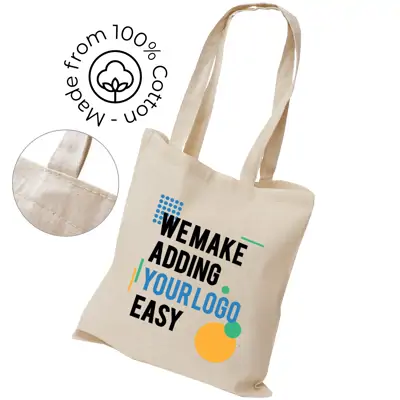


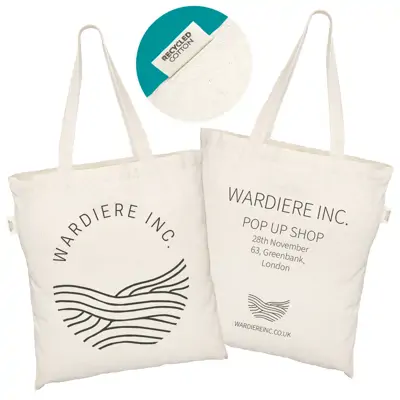
Natural cotton
Unbleached cotton, in an off white shade with occasional darker flecks in the weave.
Those flecks are normal. They're bits of the cotton plant left in during processing, and on a natural bag they read as a feature rather than a fault. If you want a pure white bag, that's a bleached fabric and a different product.
Natural cotton is the truest surface for a printed logo, because the base is pale and neutral so ink colours sit close to how you specified them. It's the default for exhibition totes for that reason, alongside the cost at volume.
Coloured cotton
The same fabric, dyed.
Two things change when you move to a coloured bag. The first is that a light logo on a dark bag usually needs a white underbase printed first, so the colour on top stays true rather than sinking into the fabric. That's an extra pass, so it adds to the cost per bag.
The second is that dye shades vary slightly between production batches. If you're ordering in stages across a year and the colour needs to match exactly, say so when you order rather than afterwards.
Coloured cotton suits retail bags and staff gifts, where the bag is meant to look like a considered choice rather than a giveaway.
Canvas
Cotton woven heavy enough to stand up on its own.
Canvas bags hold their shape, usually have a gusset, and feel closer to something you'd buy than something you had been handed. They take both screen and full colour print well, and they'll survive years of use rather than months.
The trade offs are weight and cost. A canvas bag costs more per unit and more to post, so it earns its place where the bag is the gift rather than the wrapper.
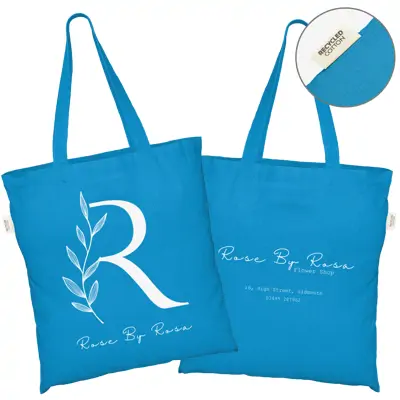
Recycled cotton
Cotton reclaimed from offcuts and worn textiles, shredded back into fibre.
The shredding shortens the fibres, which weakens them, so recycled cotton is almost always blended with recycled polyester to hold the fabric together. A bag described as recycled cotton is usually a blend, and the split is worth checking on the product page.
Expect slight variation in colour and a marginally more textured surface than virgin cotton, because the reclaimed fibres come from mixed sources. That's inherent to the material.
The certification to look for is GRS, which tracks recycled content through the supply chain.
Organic cotton
Cotton grown without synthetic pesticides or fertilisers.
It handles and prints like conventional cotton, so the difference isn't something you'll feel in the bag. It's in how the fibre was grown and processed, which is what the GOTS certification covers.
Because the difference is invisible, the certification is the whole claim. A bag described as organic without a named standard behind it's worth asking about before you order.
Popular Tote Bags
View All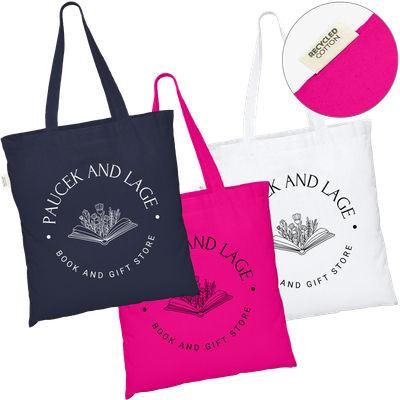


Juco
A blend of jute and cotton.
Juco sits between the two materials it's named after. It has the texture and natural colour of jute with more of the softness and drape of cotton, and it's lighter than a pure jute bag while still looking hard wearing.
It's a good middle option for retail and gifting where a plain cotton tote feels too plain and a full jute shopper feels too rustic.
Jute
A coarse plant fibre, also sold as hessian or burlap.
Jute bags are stiff, strong and hold their shape without help. Most have rope handles rather than fabric ones, and many are laminated on the inside, which stops the weave stretching and makes the bag easier to wipe out.
The print area on a jute shopper is usually large, which is why they work well for a bold logo or a slogan. The weave is coarse though, so fine lines and small text lose definition in a way they wouldn't on cotton. Simplify the artwork rather than shrinking it.
Jute is heavier than cotton, which matters if you're posting bags individually rather than delivering to one address.
Handles, gussets and size
Three things decide whether a bag is right for the job, and none of them is the fabric.
Handle length. Short handles are for carrying in the hand. Long handles go over a shoulder, which is what you want at an exhibition where people are carrying things all day. The measurement to look for is the handle drop, which is how far the handle hangs below the top of the bag.
Gusset. This is the extra panel that gives a bag depth. With one, the bag sits open and holds a boxy shape. Without one, it lies flat, which makes for a bigger, cleaner print area but less room inside.
Size. Check the dimensions against what's actually going in the bag. A printed programme, a notebook and a bottle is a different requirement from a pair of shoes. The dimensions are on every product page.
Popular Promotional bags
View All


How printing differs by material
Screen printing pushes ink through a mesh, one screen per colour. It's the standard for a one or two colour logo on cotton and it gives the sharpest edges. Each additional colour is another screen and another pass.
Full colour printing handles photographic images, gradients and logos with many colours, applied as a single process rather than colour by colour.
The material affects what's possible. Smooth cotton takes the finest detail. Coarser weaves like jute hold bold shapes well and lose hairlines. Dark fabrics may need an underbase.
Comparing them side by side
| Material | Feel | Print detail | Best for | Check for |
|---|---|---|---|---|
| Natural cotton | Light to medium, soft, off white | Highest | Exhibitions, volume giveaways | Weight in oz, handle length |
| Coloured cotton | As above, dyed | High, may need an underbase | Retail, staff gifts | Underbase cost, batch variation |
| Canvas | Heavy, structured, stands up | High | Delegate bags, premium gifts | Gusset, weight |
| Recycled cotton | Slightly textured, colour varies | Good | Sustainability led campaigns | GRS mark, blend percentage |
| Organic cotton | Same as conventional cotton | Highest | Certified sustainable buying | GOTS certification |
| Juco | Textured but softer than jute | Good | Retail, gifting | Blend ratio |
| Jute | Stiff, coarse, rope handles | Bold shapes only | Shoppers, bold branding | Lamination, print area |
See it before you order
Two things are worth doing before you commit to a material.
Where a sample is available, you can order one through the product page and the current terms are shown there. A sample won't carry your logo, but it tells you how the fabric feels, which is the part a photograph can't.
Then request a free Visual Proof. Our in-house designers will put your logo on the bag you're considering and send it back with the price and delivery date, usually in around 20 minutes. You can request as many changes as you need before you approve anything.