
Premium Branded Corporate Gifts for Clients and Teams
A corporate gift reads as premium when the recipient would have chosen it themselves. Not because it was expensive, and not because it came in a nice box, though both help.


Related topics
View allA corporate gift reads as premium when the recipient would have chosen it themselves. Not because it was expensive, and not because it came in a nice box, though both help.
That's the test worth applying to a shortlist, and it's more useful than a price bracket. This guide covers what makes a gift feel considered, what works for clients as opposed to your own team, and the £50 rule that quietly shapes most client gifting in the UK.
What makes a corporate gift feel premium?
Four things, and only one of them is price.
Weight and material. People judge an item in the first two seconds by how it feels in the hand. Steel over plastic, hardback over softback, a pen with some heft to it. It's the cheapest way to move a gift up a tier.
Restraint in the branding. A small logo on something good gets used in public for years. The same item covered in branding gets left in a drawer. If you want the gift seen, brand it less.
Packaging that isn't an afterthought. More on this below, because it does more work than most people expect.
Usefulness. A premium item nobody needs is still clutter. The most expensive gift in the room is the one that gets thrown away.
What doesn't make something premium: calling it premium, putting it in a bigger box, or adding a second item that dilutes the first.
Premium Corporate Gifts
View All


The £50 line that shapes client gifting
Worth knowing before you set a budget, because it catches people out every year.
HMRC generally treats gifts to clients as business entertainment, which isn't deductible. There's an exception, and a branded gift can meet it, but only if all three of these are true:
- The gift carries a conspicuous advertisement for your business, on the gift itself rather than on the wrapping
- It isn't food, drink, tobacco, or a voucher exchangeable for goods
- It costs no more than £50 to that recipient in the tax period, counting all the gifts you've given them together
Miss any one of those and the whole cost is disallowed, not just the part over £50.
Two consequences follow, and both are practical.
A branded gift is treated differently from a hamper. A bottle of wine or a box of chocolates is excluded outright, however much or little you spend. A branded notebook or bottle under £50 can qualify. That isn't a reason to give someone something they don't want, but it's worth knowing which side of the line you're on.
It's cumulative across the year. A £30 gift in June and a £30 gift at Christmas to the same client puts you over, so it's worth tracking across the year rather than per occasion.
Correct as at September 2026, based on HMRC's Business Income Manual. This is general information rather than tax advice, so check the position with your accountant before you commit.
What works as a client gift?
Something they'll use at work, where the association with you is renewed every time.
Desk and everyday carry. A good notebook, a weighty pen, a leather or felt document folder, a quality water bottle or insulated travel mug. These are the items with the longest working life, because they sit in view during the working day.
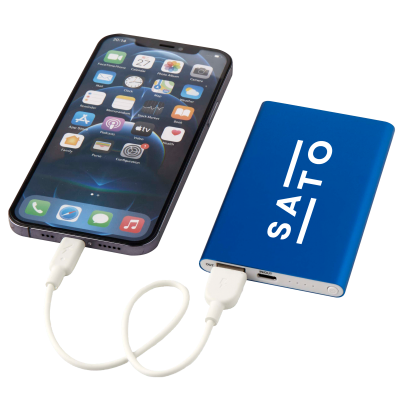
Tech that solves an actual problem. A power bank, a wireless charger, a cable organiser. The test is whether it's better than the one they already own, because if it isn't, it goes in a drawer.
Something for outside work. An umbrella, a picnic blanket, a good tote. These land well because they're a break from the desk item norm.
Gift sets, used properly. Two items chosen to go together read as more considered than one bigger item at the same spend. A notebook and pen, a bottle and a beanie, a mug and something to put in it.
Our premium corporate gifts collection brings the higher end range together in one place.
Popular Corporate Gifts
View All



What works as a gift for your own team?
The same items, one different rule: everyone gets the same thing.
Staff gifts are opened alongside colleagues, so any difference in value between people is noticed immediately, and a tiered gift creates a conversation you didn't intend to have. Recognise long service or a particular contribution separately and openly rather than through the gift.
The tax treatment is different too. Gifts to employees run on HMRC's trivial benefits rules rather than the business gifts exception, and the conditions aren't the same.

Does a recognised brand make a difference?
It does one thing a generic premium item can't: it borrows a reputation the recipient already has.
A branded item from a name someone already respects arrives with an assumed quality level, before they've handled it. That's why brand name drinkware, stationery and tech are disproportionately popular for client gifting and for senior recipients, and it's the main reason to pay more.
The trade off is that you're sharing the space. Your logo sits alongside theirs rather than owning the item, so it works best where the recipient's regard for the product matters more than the size of your mark on it, which for a client gift is usually the case.
Our brands range shows which names are currently available for branding.
How much does packaging matter?
More than most people expect, and it's the cheapest upgrade available.
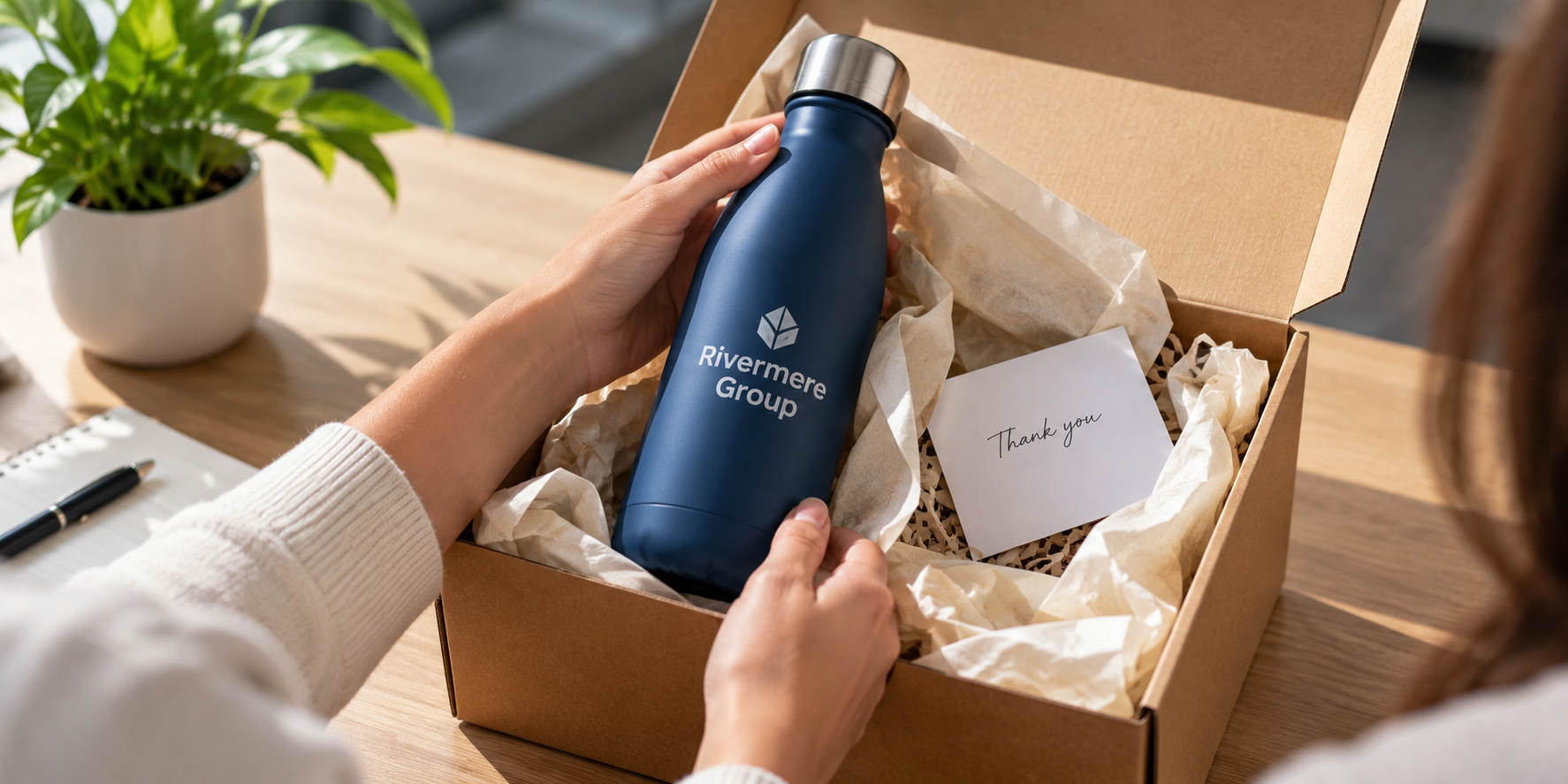
The first two seconds of a gift are the packaging, and a good item in a poly bag lands worse than a modest item presented properly. A box, some tissue, a card with something handwritten on it.
One thing to remember from the section above: for the tax exception, the advertisement has to be on the gift, not on the box. So brand the item, and let the packaging do the presenting.
What should you avoid?
Anything with a use by date on the relationship. A desk calendar is a gift with eleven months of life in it and no more.
Novelty. It gets a laugh once and takes up space afterwards.
Guessed sizes. If you're gifting clothing, you need sizes, and asking for them is awkward with a client. Stick to one size items unless you already know.
Food and drink for clients, if the tax treatment matters to you. It's excluded outright from the exception above.
Over branding. Worth repeating, because it's the most common way a good gift becomes an unused one.
When should you order?
Earlier than feels necessary, particularly for anything going out before Christmas.
Work back from the date you want gifts to land, not from the holiday itself. Every product page shows a guaranteed delivery date for the delivery option you choose, so check it against your date before you pay rather than after. That date is locked once your order is placed.
Two things add time and both are within your control. Getting a proof approved internally usually takes longer than producing it, and if you're posting to individual addresses rather than one office, collect and confirm those addresses well before you order.
Request a free Visual Proof as soon as you've a shortlist. Our in-house designers will show you your logo on the item with the price and the date, usually in around 20 minutes, you can request as many changes as you need, and the price is held for 14 days, which is useful if the spend needs signing off.